Research hero

Research

Discover more about research and development projects in the world of Modern Methods of Construction (MMC) led by Irish higher education institutions and other research-performing organisations, alongside a showcase of research activity across the country, highlighting what is being done to drive new innovation and workforce development in Irish construction.

Researching and Developing the Right Concrete Products and Application Systems for 3D Construction Printing

3D construction printing is still in its earliest phase in Irish building, but research into the best-practice materials and applications of this type of Modern Method of Construction (MMC) can help increase the rate of uptake. Two researchers from the Construct Innovate unit of the University of Galway are making this happen. 
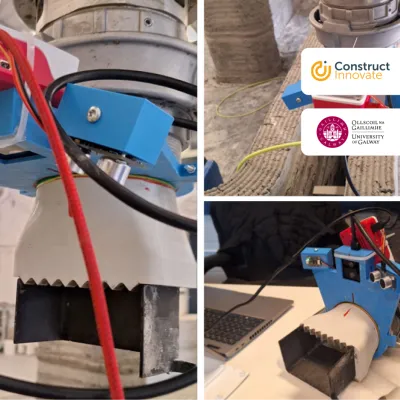
Industrial blue mechanical clamp or gripper tool shown in multiple close-up views on a workbench.
Platform4MMC: Supporting Decision-Making to Drive the Adoption of Modern Methods of Construction in Ireland

Ireland’s housing targets need to be met rapidly while achieving high sustainability standards. Modern Methods of Construction (MMC) offer the opportunity to digitise the construction sector, improving project delivery speed, efficiency, and quality. 
Logo for Platform MMC featuring stacked layers graphic in gray and dark tones.
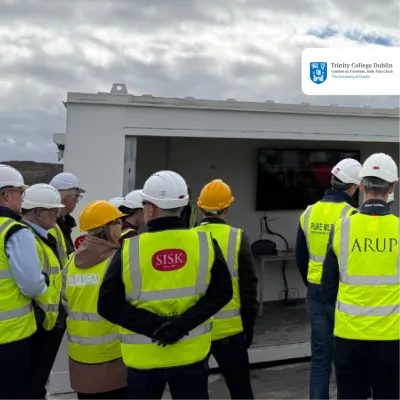
Taking MMC Research to the Construction Site and Beyond

The MMC Research Group at University College Dublin (UCD), spearheaded by Dr Daniel McCrum, is leading the innovations behind Modern Methods of Construction (MMC).  

Professional headshot of a young man in a navy blazer and white shirt, smiling in an office setting.

Research showcase

  • Two construction workers reviewing plastering work, with "The Plastering Trade in Ireland" report cover graphic.
    Apr 2026

    The Plastering Trade in Ireland – Demand, Supply, and Future Skills Needs

    South East Regional Skills Forum, on behalf of the Department of Further and Higher Education, Research, Innovation and Science
    This report presents a comprehensive analysis of the plastering trade in Ireland augmented by detailed analysis form the South East region. The study explores both current and future dynamics within the sector, with a particular focus on understanding the balance between labour demand and the available supply of skilled plasterers.
    View Report on gov.ie
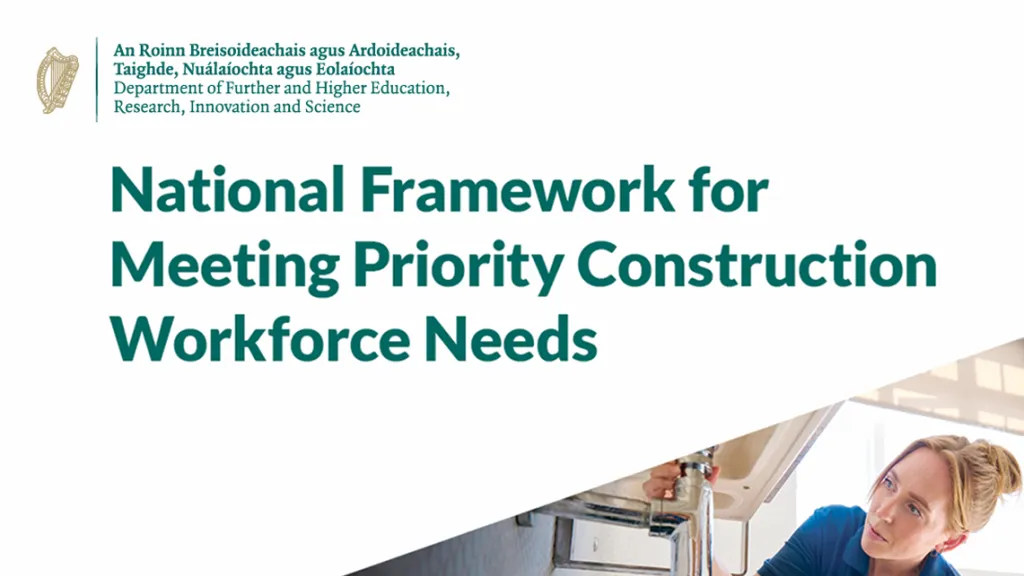
  • Graphic: National Framework for Meeting Priority Construction Workforce Needs document cover with a woman reviewing plans.
    Mar 2026

    National Framework for Meeting Priority Construction Workforce Needs

    Department of Further and Higher Education, Research, Innovation and Science
    This report presents research and analysis to support the development of a national framework for meeting priority construction workforce needs. The background to this report is that a suite of landmark Government strategies has highlighted the demands to be met from Ireland’s construction workforce to meet Government priorities in housing, climate action, and other infrastructure. The realisation of this ambition is critically dependent on progress in creating and mobilising a construction workforce of a scale and skills level equipped to meet the targets set out in these strategies.
    View Report on gov.ie
  • Brochure cover for "Information Manager (BIM) Role Profiles" with organization logos and construction scaffolding photo.
    Mar 2026

    Information Manager (BIM) Role Profiles

    Build Digital
    This document has been developed to provide clarity and consistency in defining those roles. It recognises that Information Management is not merely a technical function, but a governance and assurance function embedded within the Capital Works Management Framework (CWMF). Individuals appointed to these roles must, therefore, demonstrate more than software proficiency; they must possess structured knowledge of public procurement processes, lifecycle asset information requirements, data governance, and compliance obligations under the CWMF.
    View Report on tudublin.ie
  • Cover image for a report titled “Construction Industry in Ireland"
    Feb 2026

    Construction Industry in Ireland – The Skills and Capacity Required to Build Ireland’s Future

    Property Industry Ireland – Ibec
    This report outlines the current skills landscape, identifies the key challenges hindering the sector’s capacity, and provides a series of tangible recommendations for government and industry. By working collaboratively, the industry can build not only the physical infrastructure Ireland needs but also a sustainable, skilled, and dynamic workforce for the future.
    View Report on ibec.ie
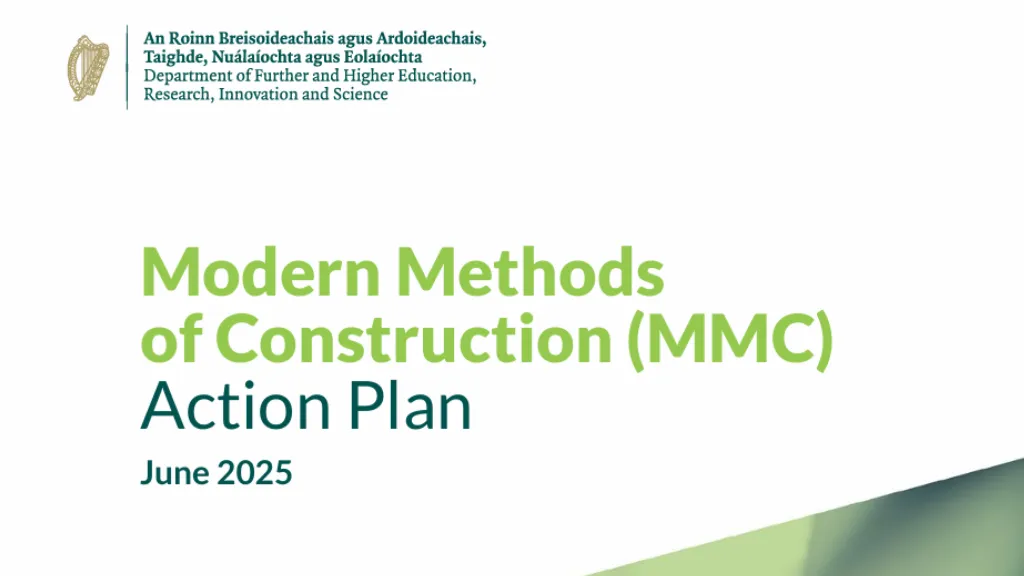
  • Cover page with the Government of Ireland logo. Text reads: 'Modern Methods of Construction (MMC) Action Plan, June 2025
    Jun 2025

    Modern Methods of Construction (MMC) Action Plan

    Ernst & Young, Department of Further and Higher Education, Research, Innovation and Science
    This report has been prepared by Ernst & Young, in accordance with an engagement agreement with the Department of Further and Higher Education, Research, Innovation and Science (“DFHERIS”) for professional services, covering an Action Plan which outlines the actionsneeded to deliver the recommendations in the detailed skills assessment report, Research and Forecast for Skills Required for Modern Methods of Construction”.
    View Report on gov.ie
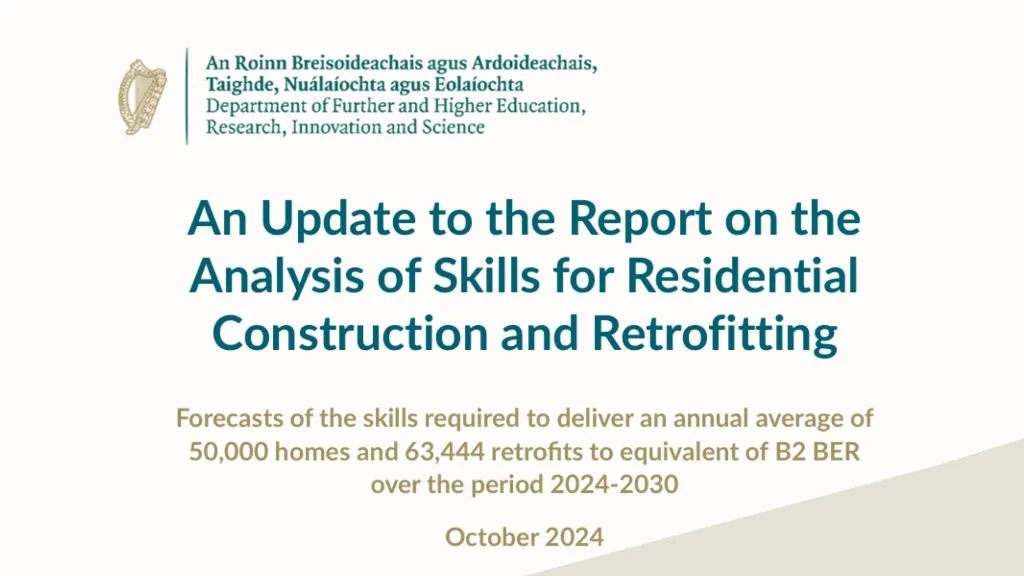
  • Cover page of an October 2024 report from the Department of Further and Higher Education, Research, Innovation and Science titled 'An Update to the Report on the Analysis of Skills for Residential Construction and Retrofitting'
    Oct 2024

    An Update to the Report on the Analysis of Skills for Residential Construction and Retrofitting

    Department of Further and Higher Education, Research, Innovation, and Science
    This report contains detailed forecasts of the skills required to deliver an annual average of 50,000 new homes and the retrofitting (B2 equivalent standard) of an annual average of 63,444 existing older homes over the 7-year period 2024-2030.
    View Report on gov.ie