How Can Standardising MMC Product Designs Drive New Efficiencies in Construction Developments?
Despite the expanded use of offsite construction, Ireland still lacks publicly available, non-proprietary detail libraries for manufacturers, designers, certifiers, and regulators. The STANDARDISE project in University College Dublin is addressing this, aiming to standardise MMC technologies for greater sector efficiency and mobility.

STANDARDISE is a project led by the Modern Methods of Construction (MMC) Research Group of University College Dublin (UCD) and the University of Galway through Construct Innovate (the National Research Centre for Construction Technology and Innovation). It is a national initiative focused on developing Ireland’s first open-access library of standardised, regulation-compliant construction details for light gauge steel (LGS) offsite construction.
Delivered by UCD, the project aims to address challenges arising from the fragmented nature of MMC product design. This stems from the absence of shared construction details and the repeated testing efforts happening in the MMC manufacturing operations across the seven MMC Categories.
Many MMC manufacturers invest significant time and money into repeated fire, structural, and acoustic testing, often investigating variations of the same fundamental wall or floor system. Without shared benchmarks, every company must independently demonstrate Building Regulation compliance with their MMC building system. A standardised design system that has already passed building regulations reduces planning times, and makes streamlined and repeatable production timelines more achievable.
Surveys conducted with MMC companies across Ireland during the early stages of the project highlighted further technical pain points. These include a lack of evidence for junction behaviour and major variation in façade treatments and construction practices.
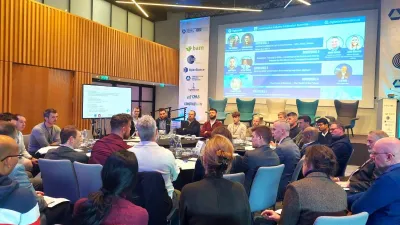
The first workshop of the STANDARDISE project, in June 2025, united manufacturers, engineers, architects, certification bodies, testing organisations, industry representatives, and government departments. The main goal was to determine which MMC category should be the vanguard for standardised detail development. After a scientific evaluation process, Category 2 Light Gauge Steel (LGS) emerged as the most appropriate candidate.
The second workshop, held in October 2025 alongside the CIF Digital Construction Summit, expanded on the technical issues related to the production of standardised construction details for Category 2 MMC LGS. Stakeholders emphasised the absence of consistent data on fire performance, the complexity of junctions such as party-wall to floor and roof-wall interfaces, the incorporation of new lightweight façade systems, and the need for more clarity in structural and acoustic assumptions during development.
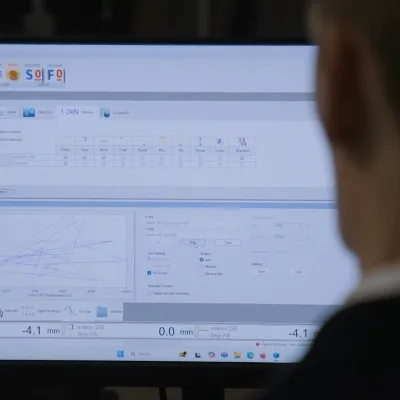
That’s where Dr Ravikant Singh, Postdoctoral Researcher with UCD’s MMC Research Group and key researcher on the STANDARDISE project, contributed to the developments.

“Many Irish companies expressed a willingness to share non-sensitive construction details if a formalised, structured process was created that protects intellectual property while contributing to a national baseline for standardised LGS designs for Modern Methods of Construction. It’s about reducing duplicated effort and providing positive change across Ireland.”
Postdoctoral Researcher with UCD’s MMC Research Group
The technical work of the STANDARDISE project is focused on three core areas.
- Mapping the LGS systems used across the Irish market. This exercise establishes the common technical specifications needed to standardise construction details.
- Aligning performance expectations with current Irish Building Regulations, ensuring published construction details will offer a pathway to demonstrating compliance.
- Identifying gaps where new testing, performance modelling, or shared evidence may be required in the future to strengthen confidence in key detail variations.
To date, the STANDARDISE project has already reached several milestones. The full mapping of common LGS wall, floor, and roof systems used by Irish MMC companies is complete, with several manufacturers willing to share their specific construction details in their NSAI Agrément certificates. A preliminary library catalogue has also been developed, outlining how wall, floor, roof, façade interface, and junction details will be categorised and presented. Dr Ravikant expanded on these successes, echoed widely by both industry and Government. Additionally, an NSAI Standards Committee for LGS residential construction has formed on the back of the STANDARDISE project.
“Feedback to date has been positive from our industry partners, which include MMC companies Remagin Ireland, Carlow Build, and Vision Built. We’ve also had a great response from the Department of Housing, Local Government and Heritage.”
Postdoctoral Researcher with UCD’s MMC Research Group

The positives of standardised MMC system designs go beyond the operational benefits for businesses at large. It allows construction professionals to learn more MMC-related skills and enjoy greater career mobility across the industry.
“Standardised design systems make it easier for professionals to upskill and transition into MMC-related roles. Once construction professionals learn the basics of MMC, they can have full mobility across different technologies in the industry.”
Postdoctoral Researcher with UCD’s MMC Research Group
Multi-trade expertise across LGS and beyond to the likes of prefabricated timber frame, Insulate Concrete Formwork, and other MMC systems means a more adaptable workforce. It also means a workforce able to move with the times as the needs of the national construction sector changes to meet the needs of an ever more diverse society in Ireland.
Dr Ravikant comes to the STANDARDISE project with a rich background in engineering. After completing a Master’s of Technology in Structural Engineering related to structures and seismic risk in the Indian city of Bhopal, Dr Ravikant decided to pursue further study. Noticing an “appetite for research into fire safety”, he undertook his PhD while guest-lecturing at another university on topics such as engineering geology, construction planning, and engineering hazard analysis. In late 2024 Dr Ravikant noticed a research posting with the UCD MMC Research Group – an opportunity he couldn’t pass up on.
“I had strong motivations in my personal life to relocate to Ireland for my research, but I am also aware that the cutting-edge of research into MMC is happening across first and foremost in Europe, with Ireland as one of main hubs in that ecosystem.”
Postdoctoral Researcher with UCD’s MMC Research Group
What are the next steps for STANDARDISE? Dr Ravikant looks to the impact this project could have on the construction sector, not in some distant future, but just down the track.

“We have a €1.6 million allocated for further development, and are looking for companies to link in with us and share their acceptable details, to create a standard for the technical specifications of key MMC systems and technologies. With that support, by the end of this year we will have initial acceptable construction details guidelines which will become the standard for new companies from 2027.”
Postdoctoral Researcher with UCD’s MMC Research Group
The STANDARDISE project is advancing toward the creation of a comprehensive, openly available library of Category 2 LGS construction details, informed by deep industry engagement and aligned to current regulations. As the project progresses through detail drafting, refining, and review, it is poised to become a significant national resource supporting Ireland’s transition to higher-quality and more scalable MMC delivery.