How can Housing Development be Optimised with Leading Precast Concrete Solutions?
Precast concrete as a construction system offers many benefits, including greater energy efficiency, structural durability, easier installation than concrete blockwork. O’Reilly Precast has been one of the leaders in the Modern Methods of Construction (MMC) space for years, working with prominent developers and social housing bodies, as well as their own staff and contractors, to make the most of precast concreting.

O’Reilly Precast has provided precast concrete solutions to the Irish and UK markets for almost 25 years. Emmet Cosgrove, CEO of O’Reilly Precast, explained the benefits:

“Our precast buildings offer faster construction times, superior quality control, and increased durability compared to traditional onsite methods. Other key benefits include reduced onsite labour requirements, superior thermal and acoustic insulation, high resistance to fire and natural decay, and enhanced environmental sustainability due to minimised waste and factory-controlled production.”
CEO, O'Reilly Precast
But the Co. Cavan-based company has its roots further back than its Modern Methods of Construction would suggest. The O’Reilly Group has been in operation since the 1930s, branching into manufacturing precast concrete buildings offsite in the early 2000s.
Today, O’Reilly Precast is one of 11 different facilities across Ireland – in Co. Cavan, Co. Monaghan, Co. Meath, Co. Westmeath, as well as a factory in Cardiff for UK-based clients. Across these sites, O’Reilly Precast now directly employs 320 construction professionals, with a further 250 people employed indirectly as subcontractors and freelance workers.
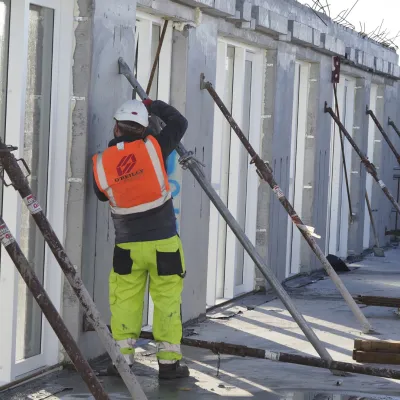
This headcount stems from O’Reilly Precast’s total approach to offsite construction and onsite installation. From preliminary drawings, O’Reilly Precast’s design team models and architectural drawings of the completed structure, with designs manufactured and tested onsite, delivered to site, and fixed onsite by installers expert in the company’s system.
Emmet explains how this end-to-end approach helps to streamline operational efficiency:
“The key to success for any precast concrete development is early engagement with the client, so their design team can fully engage with ours. Our in-house design capability is a plus as we have control of the project from the outset and can value-engineer solutions to issues that arise before manufacturing starts. This collaboration is key to achieving the time- and resource-saving of utilising precast.”
CEO, O'Reilly Precast
By embedding an in-house design team into business operations, O’Reilly Precast immediately diversifies the base of technical expertise and trades it needs to hire for.
“Requirements vary widely from Design and Structural Engineers needed for our in-house design office; to Project Managers, Contracts Managers, safety personnel, quality personnel, steel fixers, carpenters, and skilled Machine Operators in our offsite facility; through to qualified installation crews who construct our buildings.”
CEO, O'Reilly Precast
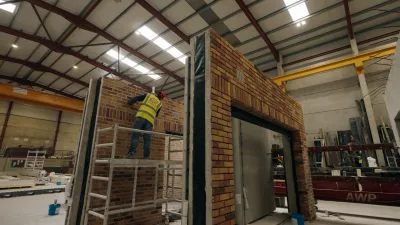
How does O’Reilly Precast ensure this diverse team of construction professionals is fully knowledgeable to the best practices of designing, manufacturing, and installing precast concrete solutions? Emmet clarifies that this comes from investing in developing in-house training and giving staff pathways to progress their career within the company.
“Upskilling and promoting existing staff is crucial. We have developed a staff development portal where employees can avail of a multitude of courses. We have also developed our own in-house training centre, in our O’Reilly Barleystone facility. Membership to professional bodies, such as Engineers Ireland, is also encouraged and covered by the business. Today, we have leaders throughout the O’Reilly Group who started in our production units and have progressed over the years to Factory Supervisors or Construction Supervisors, or other areas of the business.”
CEO, O'Reilly Precast
Jasenka Culina, Project Manager for O’Reilly Precast, is an example of this investment in upskilling and promoting people from within paying dividends. Jasenka studied civil engineering in her native Croatia, starting out as a Detailer for a firm doing restorations for UNESCO-listed buildings around the country. After moving to Ireland in 2019, she first worked as a Technical Designer in a roofing and cladding company based in Co. Cavan.

In 2021 Jasenka moved O’Reilly Precast as a Design Engineer and, around a year and a half later, she undertook internal upskilling to become a Project Manager for MMC projects.
“Moving into a project management role seemed interesting because working with precast frames requires more upfront design coordination. Changes mid-project are difficult to enact and expensive, negating the time and resource saving of utilising precast concrete. Sequencing and structural tolerances are also important, with these details need to be known prior to site work commencing. My role enables just-in-time delivery of the precast elements to site when needed.”
Project Manager for O’Reilly Precast
This upskilling included a CIF Safety for Construction Managers course. Jasenka also completed a Project Management in Construction course through the Fitzwilliam Institute – a precursor to another project management programme she is currently undetaking.
Jasenka offers insight into how she was able to combine on-the-job training with this upskilling to make the leap from her past technical roles into project management.
“Adapting to my Project Manager role required me to gain a full understanding of designing for precast concrete elements, how structures fit together, and ways to apply that from project to project with different contractors – some of whom have never dealt with precast concrete before. In addition, being a woman in the building industry requires total technical expertise as women are still not the norm and contractors can look on us strangely, especially if we hold management positions.”
Project Manager for O’Reilly Precast
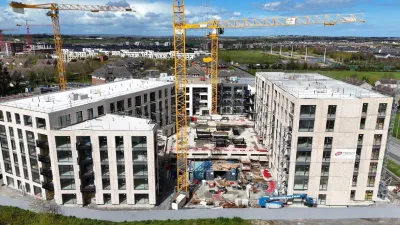
Jasenka has tested her project management skills on the recent Griffin Point development, 422 apartments on the Hole in the Wall Road in Donaghmede, Dublin 13. The project, led by main contractor Townmore with O’Reilly Precast as a subcontractor, is being delivered for Respond, Ireland's largest construction-led Approved Housing Body (AHB) and service provider.
Nick Taaffe, Senior Development Manager at Respond, shared his thoughts on what made this recent development such a stand-out project for the AHB.

“The Griffin Point scheme is amazing. We do our due diligence on all types of MMC systems to ensure initial technical designs will work with them, and we have seen that MMC can deliver at scale – and it’s straightforward.”
Senior Development Manager at Respond Housing
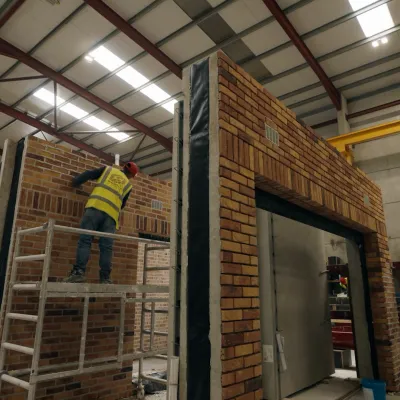
The Griffin Point development, utilised O’Reilly Precast’s Precast Solid Grey Walls, 200mm Hollowcore Floors, Precast Stairs, and Insulated Brick Façade Walls. These elements allowed for cross-wall construction, which uses load bearing, precast concrete transverse walls set perpendicular to a building’s axis and gives structural support to the building. This construction technique allows for rapid assembly, more efficient floor spans, and a high standard of fire resistance.
Darragh O’Reilly, UK Business Development Manager for O’Reilly Precast, explained how these products are developed within a business ethos to create solutions for projects with tight installation timelines without any compromise on quality of construction.

“O'Reilly Precast’s products are the result of many years of research and development, both by market research in Ireland and abroad and by observing the changing construction needs for modern buildings. Products are manufactured in our state-of-the-art factories, with the likes of tilt-tables used to optimise daily production and make transport from our facility in Cavan to site easier and safer.”
UK Business Development Manager for O’Reilly Precast

Phase One of the Griffin Point development was completed in November 2025, delivering 210 modern social and cost-rental homes to the market. Phase Two is due for completion in Q2, 2026.
Nick adds that this project, and Respond’s other work with MMC companies, has incentivised the organisation to learn more about how Irish housing development can be optimised with Modern Methods of Construction.