What Impact does Whole Life Carbon Assessment and Lean Design Have on Modern Methods of Construction?
A core principle of Modern Methods of Construction (MMC) is Leaner development – from design and coordination with stakeholders to reducing material wastage and carbon output to more efficient structural assembly and installation. Boylan Consulting is a multi-disciplinary engineering firm focused on delivering value for sustainable construction through services such as whole life carbon assessment.
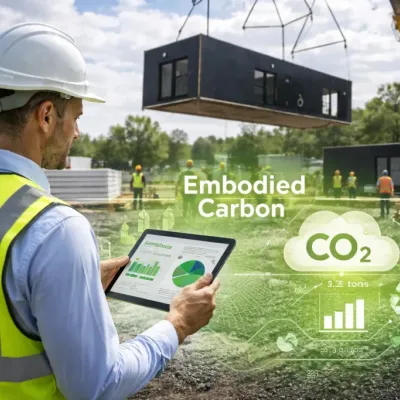
Modern Methods of Construction (MMC) encompass three elements improving the speed, 'green-ness', and quality of building projects: digital technologies, Lean principles, and sustainable engineering. While many developments in the modern construction sector are moving to a 'design and build' model, there is still a vital place for consultants with expertise in Lean principles and environmental engineering. These firms can help to make the design phase more effective and align building plans with regulations.
Whether a company manufactures modular units offsite or builds traditionally onsite, a focus on reducing waste and carbon output with whole life carbon assessment can reap major dividends. This is a service Boylan Consulting has significant expertise in. Since the early 2000s, Boylan has helped clients navigate the Irish construction sector as regulations around fire safety, planning, sustainability, and structural design become more complex. The engineering firm now specialises in modular construction advisory, structural engineering, and sustainability reporting.
Managing Director Cathal Boylan expanded on the principles of Lean construction and the circular economy underpinning these services, and how Boylan works with clients in this area:

"In our experience, the key to successfully implementing circular economy principles is by demonstrating value. Site teams and suppliers are often receptive when principles are linked to practical benefits such as reduced waste, improved programme certainty, material efficiency, and cost savings. Early engagement is key, as it allows sustainability and circular economy goals to be incorporated into design, procurement, and building planning from the outset rather than introduced later. We have found many of these principles align naturally with MMC."
Managing Director at Boylan Consulting
This is a point Nelis Snyman, Projects Director at Boylan Consulting, echoes wholeheartedly:

"A major opportunity for waste reduction and Leaner projects is bringing all parties into the planning phase earlier. With the right collaboration, we can greatly reduce wastage and the total carbon output of a development before the design phase even starts."
Projects Director at Boylan Consulting
In the modern construction environment, understanding the environmental impact of a given project is essential for sustainable design and adhering to sustainability regulations. Boylan offers specialist embodied carbon evaluations and whole life carbon assessments suitable for both contractors in the design and build model, and architects creating more sustainable buildings and developers that need to demonstrate compliance with national carbon reduction targets.
Boylan's Head of Environmental & Senior Environmental Scientist, Niamh Murray, explained why it's key to have expertise in sustainable engineering in delivering Leaner and greener projects:

"Embodied carbon and whole life carbon assessments are relatively new disciplines, but they cannot be compromised on. An environmental engineering team needs to be involved in planning and design to truly see the benefits of sustainable construction."
Head of Environmental & Senior Environmental Scientist at Boylan Consulting
What is a whole life carbon assessment? This evaluates all carbon and greenhouse emissions linked to a building—from planning to construction to operations across a structure's lifespan—in accordance with the European EN15978 standard to measure environmental performance.
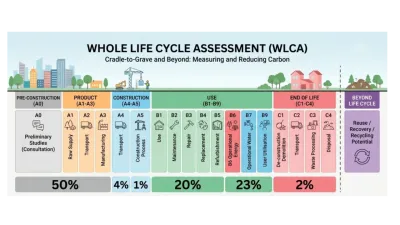
Niamh explains that this process starts with acquiring the design data from the Building Information Model, with generic industry emissions for the proposed construction materials used as the baseline carbon footprint. The team then recommends alternate materials or methodologies to reduce emissions until designs match industry targets from, for example, the Royal Institutes of the Architects of Ireland. This method is applicable to traditional or modular builds, though with a modular unit designs are often locked before construction planning begins.
Niamh has technical expertise in using tools such as the Life Cycle Global Warming Potential Assessment and worksheets from the Sustainable Energy Authority of Ireland. She also relies on skills in communication and knowledge of Lean principles to lay out the economic benefits of reducing embodied carbon on a project, alongside the benefits of greater regulatory compliance.
This expertise in environmental engineering has been strengthened during her career at Boylan. Niamh joined the firm in 2019 and has developed her knowledge of core principles in sustainable construction due to Boylan's commitment to continuing professional development (CPD).
"Last year we took part in an Enterprise Ireland programme to identify operational skills gaps, assessing soft and hard skillsets in the business and identifying what people needed for their own upskilling pathway. It was valuable for me personally to see what training I need to maximise my role in Boylan, and what I need for my own career progression. As a company, we have a dedicated team that now regularly meets to identify risks in our skills gaps and opportunities to address these gaps with new ideas and engineering services."
Head of Environmental & Senior Environmental Scientist at Boylan Consulting
Nelis echoed this point, discussing the intensive period of learning and adaptation that came with the relocation from his native South Africa to Co. Meath and work in the Irish building industry.
"The most intensive period of upskilling in my career was after moving to Ireland in 2025. I had plenty of experience as a Structural Engineer in South Africa, but after joining Boylan and buddying with an experienced Irish building engineer, I have never learned so much. There are, of course, different construction policies, but also different sustainability standards. Boylan has been critical in helping me adapt, particularly in the planning, certification and design services we offer to modular builders. I never go home without having learned something new each day."
Projects Director at Boylan Consulting
This regimen of upskilling in the core sustainability standards of the Irish construction industry is core to Boylan's values and underpins the quality of service offered to builders and architects.
"We have a significant focus on CPD, with a budget aligned for it – this is vital when MMC so fast moving. This helps us to continue evolving our services as the MMC industry moves. It comes with an investment, but it's a worthy investment."
Managing Director at Boylan Consulting
Indeed, Boylan has had a tangible impact on reducing the carbon output of their clients’ projects. Through the company’s involvement in the Devolved Schools Building Programme (alongside several modular manufacturers), it has deployed whole life carbon assessments on numerous projects. By optimising designs and material specifications, Boylan has achieved carbon savings of 15-20% across all its education projects, equating to around 200,000kg CO₂e saved in 2026.
Cathal had the final say, laying out the plan for Boylan to continue supporting greener and Leaner construction, with modular manufacturing or in traditional onsite building:
"We believe the future of MMC will be driven by greater collaboration between design, manufacturing and compliance, with sustainability as a core consideration at the heart of it all. As consultants, we can help bridge these disciplines and provide the confidence needed to support wider adoption of MMC across the Irish construction industry."
Managing Director at Boylan Consulting