How Can Construction Professionals Upskill in MMC for 2026? Part 1
Irish educational institutions along the Atlantic coast, and in Munster and the midwest, are promoting training designed for building professionals to upskill in Modern Methods of Construction (MMC). Where do you learn about lean principles, sustainable building, and digital tools and advance your MMC knowledge?

Modern Methods of Construction (MMC) are becoming increasingly common in Ireland. This stems both from broader industry adoption of lean construction principles, sustainability measures, and digital building tools, as well as backing from government for policy reform. Education institutions are the third in the trifecta needed to entrench MMC. So, what training courses are Irish universities developing to teach the skills future-ready building professionals will need to excel in the industry for years to come?
Atlantic Technological University
Atlantic Technological University (ATU) has multiple campuses in the west and northwest of Ireland (with many courses also taught fully online). Teaching everything from advanced manufacturing systems to fire safety to quality management, ATU is one of the most comprehensive educators of topics in the built environment nationwide.
Dr. David Collery, Lecturer in the Department of Civil Engineering & Construction, notes that ATU is supplementing its formal training programmes with more flexible learning.
“We developed a MOOC [Massive Open Online Course] in Lean Construction last year, so learners can build towards a Lean Belt. We are also developing a BIM MOOC, in response to requests from industry practitioners to teach digital construction skills earlier, particularly with the Government's introduction of the BIM Mandate. This should be available for people in the first half of 2026.”
Lecturer in the Department of Civil Engineering & Construction
ATU also took this feedback onboard to update the Postgraduate Certificate in BIM and Lean Construction Management in advance of the 2025 academic year. MOOC courses are free for everyone to access, after registering, at Free Courses ATU.
Future Cast is a key partner for ATU in teaching building professionals in the region. The centre for innovation, research, and training is in Co. Leitrim, while there is also a MEP training and assessment facility in Co. Roscommon. ATU is working with Future Cast to provide demos in modern technologies, while a PhD student at ATU is using Future Cast to research lower carbon concrete for use in the centre’s 3D concrete printer.
This symbiotic link between training and the need of industry is a major part of ATU’s teaching philosophy, according to David: “Collaboration with industry on projects drives research and innovation, as well as identifying the need for upskilling.” This connection extends to ATU’s academic and research teams too, who regularly engage with industry providers to stay updated on developments with relevant software.
Student feedback is also integral to ATU making courses relevant to addressing skills gaps and preparing students to maximise opportunities for bringing the sector forward.
“Studying at ATU has been a very positive experience. There are highly experienced lecturers delivering the modules ... One of my favourite subjects has been in relation to sustainability. Ireland’s challenges in relation to carbon emissions are quite well flagged, so it’s important for professionals to stay ahead of the curve with the evolving environment and the regulation changes.”
Master’s Student at ATU
University College Cork
Founded in 1845, University College Cork (UCC) is one of Ireland’s longest-standing universities, with programmes related to engineering and the built environment taught there for more than 150 years. But this traditional institution has all eyes on the future when it comes to training modern architects capable of designing modern buildings.
Maroun Tabbal is a lecturer for UCC's Bachelor of Science and Masters in Architecture courses. He is also the CCAE Lead for Building Change and the Programme Coordinator for the university's architecture micro-credentials training and key participant in the ‘Building Change’ initiative.
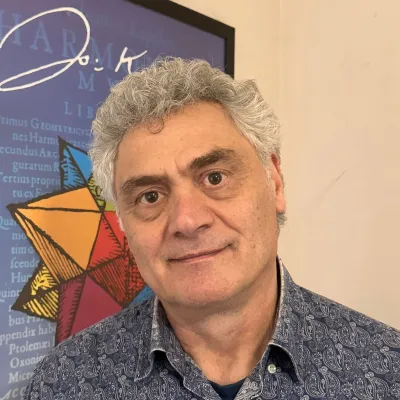
“It's about transforming architectural education in Ireland by updating the curriculum to respond to climate change requirements. This ensures graduates possess skills related to four pillars: promoting trans-disciplinary innovation, community engagement, innovative practice, and ethical practice in relation to sustainability and decarbonisation in designing homes for the 21st century.”
Lecturer for UCC's Bachelor of Science and Masters in Architecture courses
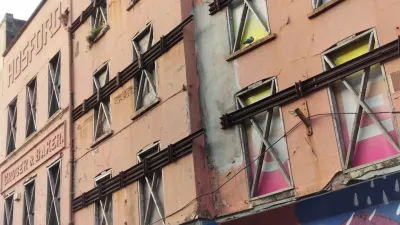
One of the core Continuous Professional Development CPD) programmes for UCC here is ‘Reviving Buildings’. This CPD programme was built with the expertise of graduates, practising architects, and members of allied professions.
First run as a ‘Train the Trainer’, this programme is grounded in a fundamental idea that the greenest building is the one already built. Rather than discarding the embodied carbon invested in these structures, adaptive reuse preserves ‘banked’ resources while upgrading buildings to modern energy standards. Recent research analysing more than one million buildings confirms this approach: extending building lifespans with renovated structures delivers significantly lower whole-life carbon emissions than demolition and rebuild.
“One of the of the changes we made was adjusting the course’s assignment structure to support what professionals are working on in their jobs. Now, you do a Capstone assessment based on day-to-day projects. We think this will make the course more relevant for architects and digital construction professionals to learn about adaptive reuse and resilient retrofitting of buildings.”
Lecturer for UCC's Bachelor of Science and Masters in Architecture courses
UCC runs two other courses related to Modern Methods of Construction. The first is a micro-credential in Digital Storytelling and Immersive Fictions to, as Maroun put it, to “facilitate trans-disciplinary innovation on future-ready architecture by providing a common language — stories — for people from different disciplines to communicate.”
The other module teaches the reuse and repurposing existing structures – a core principle in sustainable construction. Dr Michael O’Shea, Lecturer in Structural Engineering, developed the micro-credential to support both construction professionals and engineering students at Masters level. In the course, learners learn how to utilise Modern Method of Construction to sustainably reuse existing buildings.
Explore the courses
available at UCC
Technological University of the Shannon
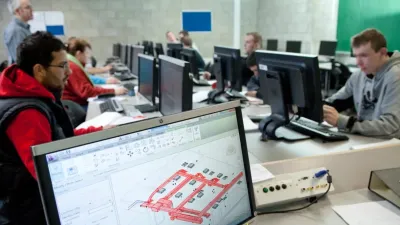
Technological University of the Shannon (TUS), spanning campuses in Limerick, Tipperary, Clare and Westmeath, offers a range of flexible special purpose awards and micro-credentials teaching skills relevant to Modern Methods of Construction. This includes decarbonising the built environment, energy renovations and retrofit, Building Information Modelling, regulations compliance, construction procurement, and more.
These programmes are developed by experts in the Department of Engineering, Built Environment & Informatics, in consultation with industry, and reviewed periodically.
“We have a process of regular programmatic review – every five years we review each module and its learning outcomes, overall course themes, feedback from industry etc to ensure courses are fit for purpose. We want our graduates to be as employable as possible. We've had work placements built into our courses for a long time, further ensuring that graduates are industry ready.”
Dr. Pat Gill, Head of the Department of Built Environment at TUS
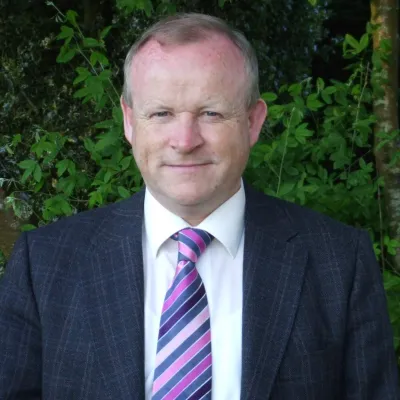
The recent focus in the Department has been working in tandem with the university’s Flexible and Professional Learning Office to develop “flexible learning that is responsive to industry”. Seamus Hoyne, Dean of Flexible and Work Based Learning at TUS, added:
“For certain themes, such as digital construction and sustainability, the university determined these needed to be taught in shorter, sharper bursts. We can create shorter programmes, such as micro-credentials or special purpose awards, in much shorter timeframes. This keeps us agile and helps us to better address the skills gaps in the industry.”
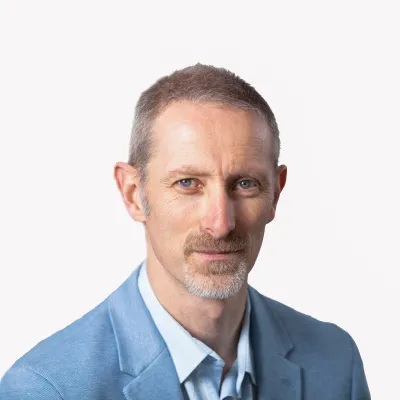
Seamus added that TUS works with other educators to offer learners the amenities needed, included Limerick & Clare ETB and IDEAM Research Institute, a multi-disciplinary centre focused on collaborative research projects and regional training. Pat added that all TUS lecturers can bring in two guest lecturers from industry each academic semester, giving learners access to up-to-date market skills and knowledge.
In recent years TUS has developed key micro-credentials in BIM with Revit Architecture and Whole Life Carbon Assessment, to meet industry demand for these skillsets. In collaboration with ATU, TUS has also developed more than 40 new programmes in the area of the sustainable built environment via the DASBE initiative.
In 2026 and looking further ahead, Pat points to the adoption of AI into teaching within the Department of Built Environment as important to improving learning outcomes.
To take your skillset to a new level in 2026, explore all the options for upskilling in Modern Methods of Construction available on Skillnet MMC Accelerate.
Related
-
 How are MEP consultants EDC Engineers preparing the future leaders of the construction industry for Modern Methods of Construction?
 -
 ICF Innovation: Amvic Delivers High Performance Homes with Less Labour and More Value
 -
 Careers in Manufacturing & Off-Site Production: Trade Skills Mobility, Lean Thinking, and Modern Methods of Construction (MMC)