How a Lean Manufacturing Mindset and Adherence to MMC Quality Assurance can Deliver Construction Excellence
Quality assurance is a key consideration in the world of Modern Methods of Construction (MMC), with the offsite prefabrication of building components making managing quality control systems simpler. What do construction professionals in this area have to say about a Lean manufacturing mindset?
Modern Methods of Construction (MMC), including technologies, materials, and processes, are often more technically advanced than traditional methods of construction. But, despite MMC not having the same uptake in Irish building, the systematic nature of MMC can make quality assurance simpler. Indeed, many MMC companies invest in upskilling construction professionals to manage quality checks and regulatory compliance, and to engage with national certifiers.
The National Standards Authority of Ireland (NSAI) manages the Agrément Certification assessment for companies using modular construction, offsite panel manufacturing, and other MMC processes. According to the NSAI’s Guide to Agrément Certification for MMC, “Agrément Certification is designed for new innovative building materials, products, and systems that do not yet have a long history of use and for which there may be no national standard”. The mission of the NSAI to provide a clear pathway to compliance in the certification process.
This is where investing time and resources in upskilling construction professionals to manage quality assurance is vital in the world of MMC. Conducting production system audits, maintaining product quality assurance, and ensuring legal compliance are core functions for anyone working in roles related to Health, Safety, Quality & Compliance.
Eoin Kennedy, Safety, Health, Environment, and Quality Manager (SHEQ Manager) at Midland Steel, is very familiar with these technical requirements.

“To succeed in a SHEQ role, you need to be inquisitive by nature and have an open mind to new ways of doing things. Many people this type of position only create procedures that address superficial problems, rather than root issues. Being curious helps you question health and safety, and quality assurance, systems in place from the outside.”
Safety, Health, Environment, and Quality Manager (SHEQ Manager) at Midland Steel
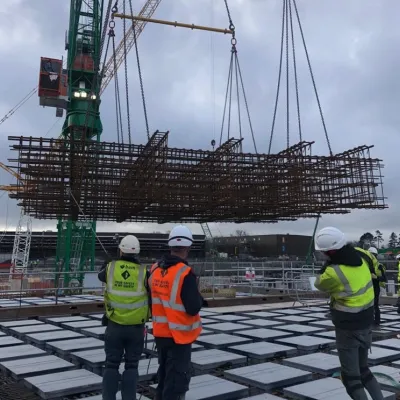
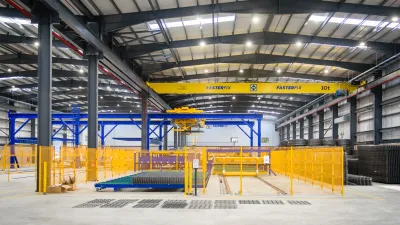
Midland Steel, based in Co. Laois, is a leading steel modular rebar manufacturer. Using factory-controlled prefabrication and Building Information Modelling (BIM), the company has refined a more efficient and cost-effective way of designing and installing steel rebar solutions than otherwise possible onsite. Eoin notes that the company’s manufacturing process is managed to ISO 9000 standards, with total traceability on the movement and manufacture of raw material into Midland Steel’s innovative solutions.
The company's quality assurance process includes spot checks on the production floor, assessing documentation, and product analysis. But the encompassing nature of Eoin’s role means he is also involved in tasks such as transport and logistics planning, health and safety briefings, and managing client requests for sustainability data.
He cited an example of a process as simple as a General Operative crossing the yard to collect steel components for assembly. In his SHEQ Manager role, Eoin altered this process, considering: firstly, from a health and safety perspective, that crossing the yard shared by moving vehicles was an avoidable risk; and secondly, quality assurance and assembly was made easier by having the steel components stored where they will be used and assessed, to reduce the risk of damage in transit. This also fed into Lean operational thinking.
Eoin started his career with a traditional construction background, before transitioning to the manufacturing sector following the Recession in 2008. He encountered systems and production principles, such as Lean, then rarely found in the building industry, and over the years developed his understanding of these concepts through training and continuous professional development. This included completing a Diploma in Health, Safety, and Welfare at Work through University College Dublin and a Certificate in Lean Manufacturing Tools.
He was able to apply this knowledge of Lean and process quality assurance to an MMC environment.
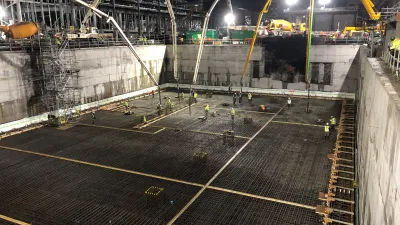
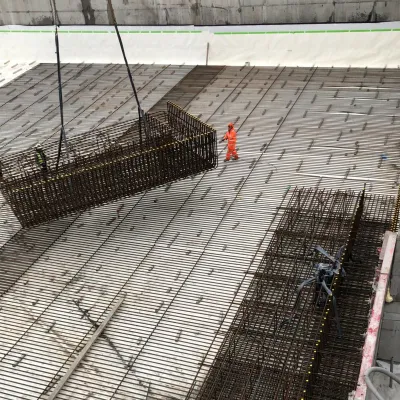
In his early days at the company Eoin supported the Intel Leixlip development, a project that saw up to 21 articulated lorry loads per day of rebar modules delivered to site. The project scale and low availability of Steel Fixers made an offsite solution, managed to high standards of quality and compliance, most viable. Pad foundations, trench bases, suspended slabs, and waffle slabs were delivered ‘just in time’, to minimise the number of modules onsite at any one time. The Midland Steel installation team then fixed and fitted reinforcement components in just days, to speed the flow of building.
This was achieved with collaboration between the design team, offsite manufacturing team, and onsite assembly team. And Eoin was at the heart of it all to ensure products and assemblies met Midland Steel’s high standards for quality and sustainability. It’s a development that would have been a lot more difficult without the prior training in manufacturing principles and operational health and safety that Eoin had undertaken.
“SHEQ Managers need knowledge of MMC logistics and procurement. Exposure to sustainable procurement and logistics processes is key to success.”
Safety, Health, Environment, and Quality Manager (SHEQ Manager) at Midland Steel
Systematic quality management and regulatory compliance review, up and down the supply chain and manufacturing process, is a key future skillset required for MMC.
Related
-
 ‘Making Innovation Core to the Industry, Giving Opportunities to Graduates’ Through Training and Mentorship at Construct Innovate
 -
 Gucci, Dulux, Castle Modular – How a Commitment to Upskilling Brought Sinéad Vaughan to Offsite Construction
 -
 What does the National Standards Authority of Ireland look for in MMC Certification Officers?