“A More Predictable Build” Not Lost “Waiting for the Weather” – The Benefits of Building Modular Homes
Modular homes offer builders and homeowners alike greater efficiency in production while still being delivered to high standards for quality and sustainability. Learn how this Co. Wexford company pivoted from steel frame engineering to develop its capability in offsite manufacturing and onsite assembly of steel frame homes.
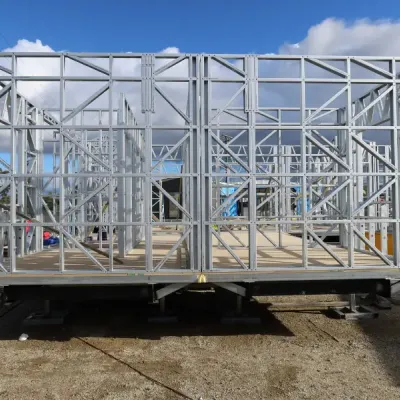
Modular homes in Ireland, particularly as one-off builds, are increasingly popular among homeowners. This is because efficient offsite production, in fewer delays and reduced waste, means smaller building companies can punch above their weight. Using Modern Methods of Construction (MMC) also means companies need less labour to manufacture and install modular homes around Ireland. This vital in an industry already 54,400 workers short on its peak of employment in 2007, according to a Property Industry Ireland report.
MMC also makes sense for homeowners as modular homes can often be manufactured offsite to high-quality standards and installed onsite faster than traditional building allows for – or as Raymond Cahill, Director at Rayco Modular Homes, puts it: “a family can lose weeks waiting for the weather ... we wanted to give customers a more predictable build.”
That was part of the motivation for Ray starting Rayco Modular Homes in 2020. The business started out in Co. Wexford as a shot-blasting and commercial vehicle repair centre. There, steel fabricators worked in welding, fireproofing, and fabricating structural steel for transport clients including Irish Rail. While that side of the business remains active to this day, by 2020 Ray had identified an opportunity to fully utilise the skills of his team in prefabricating and coating steelwork while bringing in his construction experience.

In 2018, Ray completed a Masters in Sustainable Energy Engineering at the-then Waterford Institute of Technology before working as a Site Engineer. He then moved into carrying out airtightness and sound testing, and Building Energy Rating assessments, which “gave me an appreciation for the details you can’t see in a finished home. By the time you’re trying to trace a draught in a room, the detail you need to inspect is often behind plasterboard.”
Rayco Modular Homes offers six steel-frame models, with layouts customisable to customer needs. Each modular home comes with a fully fitted kitchen and bathroom, flooring and lighting, and a heating system, plumbing and electrics all pre-installed. This gives homeowners a unit ready to move into, while Rayco Modular Homes can benefit from the efficiency of (mostly) standardised and repeatable offsite manufacturing.
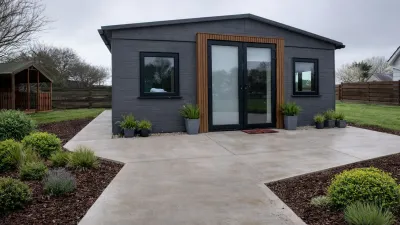
“What appealed to me was being able to solve a problem once and carry that improvement into the next modular home. If the position of an opening makes life difficult for an electrician or plumber, we can change the drawing and improve every frame that follows. Steel was a natural choice because it gives us a frame we can fabricate to precise dimensions and check against the drawings – and we already had Steel Fixers who knew how to work accurately with the material.”
Director at Rayco Modular Homes
In production, steel frames are assembled and checked, with floor, roofing, and other components also assembled. In parallel, the Rayco site team will prepare the base and service connections. After transport from the facility, each section is delivered, positioned, and joined. Trade workers complete the connections and test internal services before final handover. This efficiency in tandem works to deliver homes is part of MMC’s appeal.
“With modular homes, production can start while the groundworks team prepares the site. On a suitable site, main installation is often completed in about a week.”
Director at Rayco Modular Homes
While Rayco works with local manufacturing partners, the company has also invested in developing its own light-gauge steel (LGS) roll-forming machines. This machinery takes steel coils to form the profiles for wall frames, floor joists, and roof structures. Ray adds that, in developing this machinery, his team are applying the MMC principles used in assembling modular homes onsite to design their whole offsite manufacturing system.
In the factory, Rayco typically hires trade-qualified steel fixers and brings them through the change in mindset required for offsite manufacturing. This includes demonstrating where fixings are positioned and how components are sealed, and understanding what teams onsite will need to check once the sections come together. Given Rayco employees a number of constructions workers from overseas, especially Brazilians, team feedback sessions are given in English and Portuguese. This ensures workers learn to “think one or two stages ahead” and can “confidently tell the next trade exactly what has been done”.
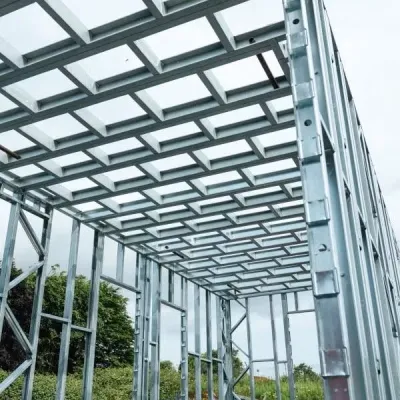
“The gap I see most often is between the drawing office, the workshop, and the site. We need more people who can look at a connection onscreen and picture the installer trying to reach it once two sections have been brought together. We’re really focusing on light-gauge steel detailing and getting feedback from installers. As we bring more production in-house, we also want experienced tradespeople from site involved in training machine operators and detailers.”
Director at Rayco Modular Homes
Tommy Lyons, Site Manager at Rayco Modular Homes, is a prime example of this expert tradesperson able to improve offsite production processes. Working for years onsite, Tommy’s route into modular home building was through site installations for Rayco.
“I’m used to organising trades, checking the progress of works, and dealing with issues. But a big part of my job now is ensuring what’s being prepared offsite will work on the ground. When I look at a drawing, I’m already thinking about who’s going to do the work onsite, what access they’ll have, and the order of works. What appealed to me about modular building was being able to bring that construction experience into the job earlier. Early input from site makes a real difference.”
Site Manager at Rayco Modular Homes
A typical day for Tommy starts with checking access points for transport. Then, his team will check the base dimensions, levels, and service positions of steel frame components against the drawings with staff in the production facility. Tommy will then talk through the sequence of installation with the team. Alignments, fixings, and seals will also be checked. Once the home is joined and weather-tight, other trades such as electricians and Plumbing Technicians will complete all connections. Finally, Tommy will walk through the finished modular home “as the customer will” to ensure works are completed to a high standard.
For Tommy, the biggest adjustment from traditional construction to managing offsite manufacturing and onsite assembly was “how much has to be settled before delivery. On a conventional build, the structure takes shape gradually. With modular, a lorry can arrive carrying a substantial part of someone’s finished home. Setting out and reading drawings accurately, and knowing how to assess quality, are all valuable skills in modular work.”
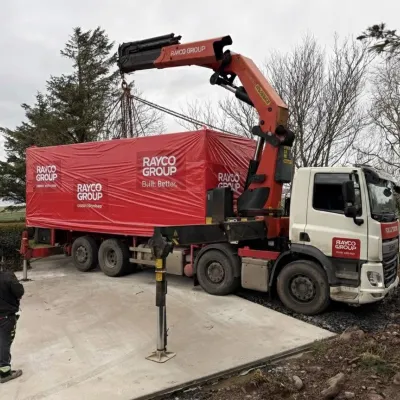
He also said that the biggest thing that can help an experienced tradesperson adapt to MMC is to see both the offsite manufacturing and onsite assembly of the LGS structures.
Tommy shared a last word on where he sees the future of delivering homes across Ireland:
“My advice would be to get onto a modular installation. Over the next five years, I expect strong demand for people who can read digital production drawings, set out accurately, assemble LGS steel structures, and check the work. We’ll also need Construction Supervisors who can coordinate several units and trades at once.”
Site Manager at Rayco Modular Homes
Related
-
 Meet the Latest Timber Frame Manufacturer to Make Use of MMC for Building Excellence in the Irish Market – Both Sides of the Border
-
 The Offsite Production, Project Coordination, and Onsite Installation of ICF
-
 Equalising Traditional M&E Engineering with Prefabricated Electrical Installations from Skilled Factory Operatives