How Do Irish Construction Companies Learn About Embedding Digital Technologies in Operations?
While many construction companies are adopting Building Information Modelling (BIM) software in projects, fewer organisations consider information management as a business-wide approach. Build Digital is a national government funding initiative offering support such as the Information Manager (BIM) Role Profiles, templates, webinars and worked examples to Irish construction companies to help them embed digital construction methodologies in day-to-day operations.

No sector can resist the drive to integrate digital technologies redefining how we work. This drive goes beyond the increased quality possible when construction companies consider the incredible innovations in Building Information Modelling (BIM) and other digital tools designed to streamline operations. These technologies can help to coordinate data from several disciplinary teams, to perform a conflict analysis of a generated information model. Based on this, a construction process can be represented digitally, allowing stakeholders to optimise time and resources, and anticipate and negate the risk of delays.
New Government policies, such as the Irish BIM Mandate, also aim to standardise digital construction practices in the public sector, to improve the productivity and sustainability of the built environment. With this policy under the Capital Works Management Framework (CWMF), public sector bodies are mandated to adopt BIM in line with ISO 19650 using Uniclass, Industry Foundation Classes (IFC) and the International Cost Management Standard (ICMS). ISO 19650 is a global set of standards establishing the principles for information management and production. This mandate ensures Government-funded developments are not only future-proofed but also delivered with high levels of efficiency and accountability.
How does this affect Irish building companies? With this new requirement, architects, engineers, and builders will be held to more stringent standards for information exchange and management. For some, particularly micro businesses, this may require a level of upskilling and a commitment of time and resources beyond their day-to-day activities.
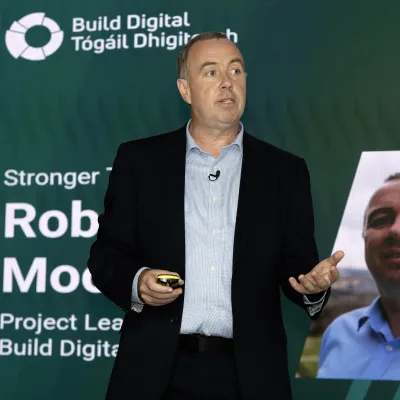
Robert Moore, Project Lead of Build Digital, expanded on the opportunities available when companies embrace information management through digital construction tools:

“Traditionally, organisations have mistakenly viewed BIM and information management as the responsibility of BIM Modellers and BIM or Information Managers. In modern construction, however, everyone in an organisation has a role to play in digital transformation, regardless of their position. It is therefore important that all staff understand and apply the fundamental principles of information management in their day-to-day work.”
Project Lead of Build Digital
The mission of the Build Digital project is to unite stakeholders from across the built environment to drive integrated digital data adoption, to improve efficiency and productivity on a sustainable basis in Ireland. This mission became all the more important after the introduction of the Irish BIM Mandate in 2024. Following the introduction of this government policy, Build Digital focused its efforts on supporting construction companies with resources to help them achieve compliant and improve competitiveness in bidding for public sector projects.
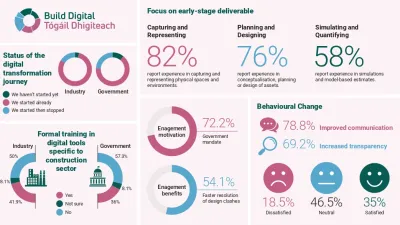
The suite of resources offered through Build Digital is extensive. Front and centre are nine practical Information Management / BIM Adoption Strategy Supports to help the construction sector embrace information management practices, to help organisations define clear goals, establish appropriate roles for operations and governance, and embed consistent, repeatable operational processes.
These supports, including templates for information management documentation and webinars, are suitable for public sector clients, architectural practices, engineering consultancies, and building works contractors. These supports can also be applied proportionately to companies of all sizes, disciplines, and levels of digital maturity.
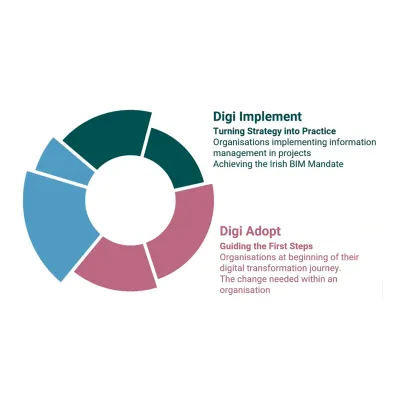
“When beginning their BIM journey, I would advise organisations to first understand the business case for adopting BIM and information management. They should then use the BIM Adoption and Implementation Roadmap to identify the purposes and use cases most relevant to their organisation and develop a strategy for achieving them. While a BIM committee can support the development of this strategy, dedicated resources will be required to implement it effectively.”
Project Lead of Build Digital
Robert added to this statement the need to consider how to implement the right tools:
“As a second stage, organisations will need to identify the software and technical solutions required to enable their digital workflows. It is essential that they select tools that are suited to the specific purposes they are intended to support. Build Digital’s Technology Evaluation Methodology helps organisations define the functional and non-functional requirements for their enabling technologies, while the Deployment Strategy supports their effective implementation and ensures that the tools deliver the intended outcomes.”
Project Lead of Build Digital
Build Digital also has a range of surveys, reports, and other information. This includes the recently created Information Manager (BIM) Role Profiles. These role profiles provide clear guidance on the anticipated competencies, experience, and qualifications required for individuals to excel in an information management role across the lifecycle of projects.
With this vital resource, it becomes easier for public bodies to recruit the appropriate personnel managing capital works projects; private companies to benchmark skills in BIM and information management and align roles to best practice; and education providers to develop targeted education and upskilling pathways in digital construction technologies.
For the first time, organisations utilising BIM tools can follow a single source of truth around the skills development and career progression in the area of information management. This ensures BIM integration and implementation follows best practices.
These profiles (and other resources from Build Digital) were only made possible with the contributions of stakeholders across the built environment. In the case of the BIM Role Profiles, Davitt Lamon of the National Standards Authority of Ireland and Stephen Lynam from the Infrastructure Division of the Department of Public Expenditure, Infrastructure, Public Service Reform, and Digitalisation, alongside Robert of Build Digital, were key contributors. Uniting the perspective of quality standards, what the Government is looking for in public works, and the outlook on construction digitalisation contributes to robust and future-proofed role profiles. It also speaks to the collaborative nature of Build Digital.

“Build Digital collaborates with stakeholders across the construction and built environment sectors, including industry, government and academia. Through initiatives such as the Accelerating Infrastructure Productivity and Capacity Working Group, we have seen a strong willingness among stakeholders to work together to improve the construction industry and the wider built environment, without competing agendas. There is a shared understanding that greater digital adoption and better information management will support the delivery of Project Ireland 2040 and contribute to a better built environment for Ireland’s citizens, residents and visitors.”
Project Lead of Build Digital
With digital transformation an ever more pressing concern for construction companies of all sizes, Build Digital’s objective to drive integrated digital data adoption couldn’t come at a better time. With the resources available through this project, companies can compete for work on major public sector developments and plan for a more digitally enabled future.