Is Low-Carbon EPS Insulation Key to Developing More Sustainable Housing? And How Do Companies Develop the Right Skillsets?
Low-Carbon EPS offers strong thermal performance, a reduced embodied carbon footprint, and compatibility with a range of energy-efficient building systems, making it a practical choice for more sustainable housing. KORE Insulation opens up on its innovative approach to lower-carbon construction – and how the company assesses internal skills gaps and implements tailored training to close them.
Ireland’s climate, coupled with more stringent building standards for carbon output and energy efficiency, makes insulation a key consideration in housing projects. While industry regulation once focused on operational energy and U‑values, policy has now shifted toward calculating embodied carbon, whole‑life performance, and verified onsite delivery, driven by the Energy Performance of Buildings Directive and 2030 Climate Targets.
Now imagine building modern, future-ready structures with a product made of up to 100% renewable feedstock, developed with reduced carbon dioxide emissions of up to 90% but without sacrificing thermal performance? KORE Insulation has just that product.
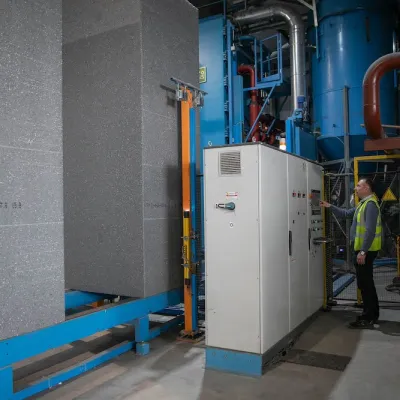
While Expanded Polystyrene (EPS) is already widely used in sustainable construction, KORE Insulation’s enhanced, low-carbon EPS maximises thermal efficiency, is comprised of up to 98% air, and is fully recyclable when clean, These factors support lower material use and reducing embodied carbon profile.
Finnian O’Hanlon, Technical Manager at KORE Insulation, explained that this included replacing fossil‑based feedstocks with renewable bio‑naphtha sourced from certified biomass rather than petrochemicals.

“This enables the low-carbon EPS to act as a ‘like-for-like' substitute for standard EPS, reducing embodied carbon without compromising performance thermal or structural performance.”
Technical Manager at KORE Insulation
KORE’s EPS products are designed to support compliance with Irish Building Regulations, including TGD Part L and NZEB requirements when correctly specified. Importantly, the company’s EPS solutions are accredited to EN13163 standards, and supported by NSAI Agrément Certification and independently verified Environmental Product Declarations. In addition, independent REDcert² Certification verifies all the low-carbon products, giving building specifiers confidence in their environmental robustness and credibility.
Finnian gives the example of the environmental credentials of KORE Insulation’s low‑carbon EPS at work: “A typical three bedroom, semi‑detached home (P/A ratio 0.4) achieving a U‑value of 0.15W/m²K would incur embodied carbon emissions (A1–A3) of approximately 984kgCO₂eq using conventional rigid board insulation. This falls to around 431kgCO₂eq when using KORE standard EPS, and to minus 53kgCO₂eq when using KORE Insulation’s low‑carbon EPS products, representing a net carbon-negative outcome relative to conventional solutions.”
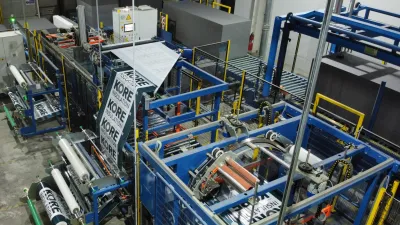
Finnian elaborated that the main challenges in product testing and development were reducing energy intensity and material waste in production at scale:
“The team addressed these factors through onsite renewable energy generation, new and more efficient production machinery, high-precision cutting to minimise off‑cuts, and factory‑wide digital monitoring to optimise efficiency in real time.”
Technical Manager at KORE Insulation
Caroline Ashe Brady, Commercial & Sustainability Director for KORE Insulation notes that product development for Modern Methods of Construction (MMC) operations has been a key investment in recent years:

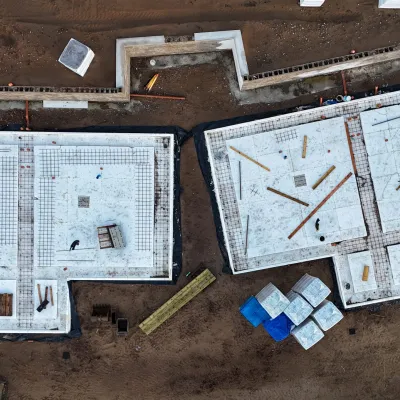
“With our investment in MMC product development, we now widely supply EPS insulation products to manufacturing facilities producing MMC systems for use in the Irish new build market. As an example, our Insulated Foundation system is growing rapidly in its application on new build projects across Ireland and the UK.”
Commercial & Sustainability Director for KORE Insulation
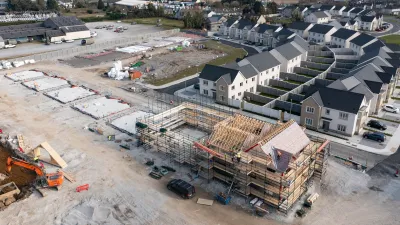
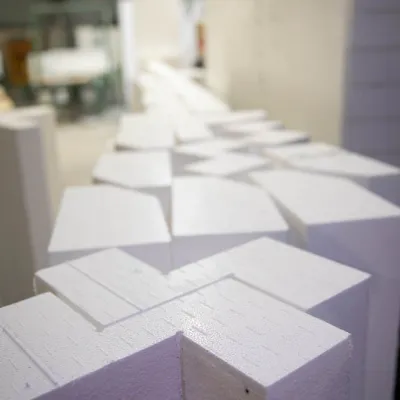
The EPS solution is now available in much of its prefabricated systems, including exterior wall insulation, insulated foundation system, and void former applications. Extensive options for negating Ireland’s variable climate will help construction companies to retrofit existing homes and develop new, more sustainable housing stock. This reality, coupled with Ireland’s supportive grant landscape for retrofitting and the cost-efficiency of offsite construction, answers the perception barriers about the value of both retrofit and compliant new builds.
To excel in the construction industry, KORE Insulation hires for a blend of engineering, sustainability, construction, and technical commercial skills. Current employees hold a range of qualifications, from chartered professional accreditation to technical degrees in relevant topics such as architectural technology, sustainable development, construction project management, bioconstruction, and product development engineering.
Akshay Sawant is KORE Insulation’s Project & Sustainability Engineer, charged with project managing energy audits and sustainability initiatives supporting production operations. Although Akshay has more than seven years’ engineering experience, he came upon the role at KORE Insulation after returning to studying when he moved to Ireland in 2022.

“I moved to Ireland to study a Master’s in Business Management in Dublin City University after project engineering roles in Mumbai, India for five years. When I was looking at next steps, I was considering courses in Canada, Australia, and Ireland. I decided on Ireland as I had friends here and they said the people were so friendly.”
KORE Insulation’s Project & Sustainability Engineer
The culmination of this course was a Practicum (Applied Research) on low carbon products linking Akshay with KORE Insulation. After graduation, Akshay retained an interest in the company and applied for their opening as Project & Sustainability Engineer.
“Moving from Mumbai, 21 million people, to Dublin and then to Kilnaleck, Co. Cavan, was a massive lifestyle adjustment. The people at KORE were incredibly supportive, helping me settle in by offering lifts and providing a strong support network in my new role. In addition, KORE Insulation’s strong culture of continuous learning helped me hone new skills in the engineering and sustainability domain.”
KORE Insulation’s Project & Sustainability Engineer
His engineering experience, as well as the business strategy and analytics skills developed in his Master’s degree, gave him a solid base to start in the role. KORE Insulation built on these skills with internal training in EPDs focused on Low Carbon Production, as well as learning the principles of ISO50001 (energy management system), and ISO 14001 and ISO 9001 for quality and environmental management systems.
In addition to the upskilling done through KORE Insulation, Akshay has completed learning through the Skillnet Climate Ready Academy. He even represented the business at the Skillnet Ireland Climate Ready Academy Sustainability Summit 2025, discussing his experiences and how sustainability training is driving real impact across industries.
Caroline elaborated on how KORE Insulation identifies and develops the right mix of skills.
“We have a total People Development approach in KORE Insulation. Firstly, we use a competency framework aligned with our overall business strategy to identify skills gaps. Once we identify those gaps, we will either hire into the organisation or upskill our current team. Senior management will work directly with individuals and industry partners to identify the most appropriate courses to upskill staff. Upskilling might involve training with colleagues, mentoring and coaching, internal training content, or attending courses provided by an external service. Of course, we work closely with our team to ensure their training is in line with their own ambitions.”
Commercial & Sustainability Director for KORE Insulation
Training programmes focused on typically include (but are not limited to) multi-skilling across manufacturing lines, topics related to MMC, insulation product specifications, retrofit construction, leadership and management development, and Lean Six Sigma.
In the context of insulation products, Finnian discussed the training that manufacturers such as KORE Insulation can offer to installers and the wider construction sector to help improve the quality and efficiency of more sustainable construction developments.
“Manufacturers have a key role as practical delivery partners. They can provide hands‑on training, tested details, and real project examples to help installers move beyond outdated perceptions of what EPS solutions offer and help them to confidently deliver low‑energy homes that perform as well onsite as they do on paper. A strong training programme should focus on how insulation choices affect comfort, durability, and performance across both new build and retrofit projects.”
Technical Manager at KORE Insulation
Better training, coupled with more innovative building insulation products, should increase the quality of Ireland’s housing stock as the national construction industry gears up to meet 2030 Climate Targets and other targeted sustainability performance indicators.