How Can Construction Professionals Upskill in MMC in 2026? Part 2
Irish universities regularly review and update upskilling courses designed for professionals in the building sector to learn about Modern Methods of Construction (MMC). What is on offer across numerous counties in Leinster (and online) and what are the skills that learners should focus on learning for 2026?

As the building industry responds to modern digital technologies, firmer sustainability requirements, and Lean business principles, Modern Methods of Construction (MMC) is becoming more mainstream. To make the most of MMC, educational institutions are working to plug the skills gaps of businesses, providing future-ready construction professionals able to maximise the opportunities awaiting the sector. Here are the new developments in training courses related to MMC on offer at three Irish universities.
“The course has helped me in many ways ... it has really opened my eyes to the benefits of higher education and learning new things.”
Customer Success Manager, Dalux
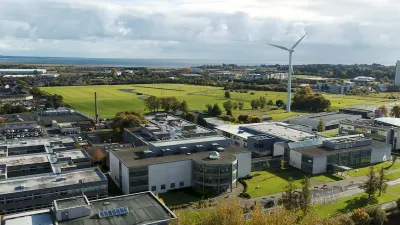
A new qualification being launched by DkIT is a Certificate in Digital Surveying and Setting Out. Currently set to launch in the Spring of 2026 (to better facilitate practical onsite learning in the outdoors), the programme offers a digital technology-focused look at surveying and setting skills. The programme has been developed in response to a demand from industry for opportunities to upskill staff on the technological advancements in the geospatial industry. Denise Quigley, Acting Head of Department of the Built Environment at DkIT, elaborated on how the programme was developed.

“These advancements have created an ever-increasing requirement for training and upskilling to enhance the efficiency and accuracy of positioning and surveying operations in the modern construction world. The programme is aimed at those working in the construction or surveying industry industries. It will focus on the practical use of modern geospatial surveying equipment, and on the understanding of, importation, extraction, and manipulation of data in various format required for every day setting out and surveying operations.”
Acting Head of Department of the Built Environment at DkIT
South East Technological University
South East Technological University (SETU), spanning campuses in Carlow, Kilkenny, Waterford, and Wexford, supports more than 18,000 learners each academic year. Headed by Dr Robin Stubbs, experts in the Department of Architecture and Built Environment teach part-time courses on the built environment, in person and online. Topics includes site and project management, building regulatory compliance, Nearly Zero Energy Building (NZEB), operational health and safety, fire engineering, and more.
The university also teaches flexible courses on advanced digital architecture subjects such as CAD and 3D modelling. This approach to modernising what is taught in relation to the built environment in Ireland extends down to undergraduate courses too.
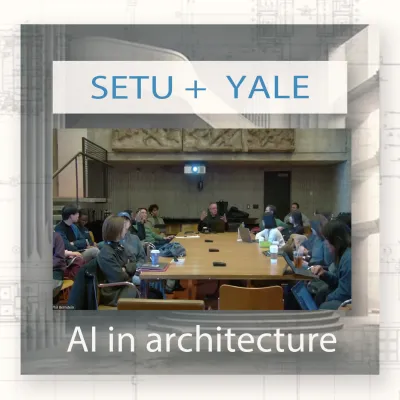
In April 2025, the Department of Architecture and Built Environment launched an exciting new initiative to place teaching AI at the heart of undergraduate architectural education. Students in SETU’s Bachelor of Architecture programme are partnering with Master’s students in the School of Architecture at Yale University, US, for a series of co-hosted online lectures and workshops led by expert faculty from both universities. Ultimately, both sets of students will complete a similar AI-focused assignment.
Garry Miley, Lecturer in the Bachelor of Architecture, explains the goal is to prepare students to fully integrate AI into their professional architecture practice.
“The era of AI in architecture has arrived. By working with a renowned institution like Yale, we can be sure our students are developing the skills and insights to thrive in a rapidly changing landscape. This partnership is a bold step that ensures our graduates stay ahead of the curve.”
Lecturer at South East Technological University
To further this opportunity, Garry is collaborating with others in the Department of Architecture and Built Environment to develop two new 5-credit modules on AI in architecture and construction, which will be introduced over the next two academic years. The first will provide an overview of the historical development of AI, with a focus on architectural applications. The second will examine, in technical depth, technologies such as Computer Vision, CNN, and Transformer that underpin current AI tools used in architectural production and design.
“Introducing AI in a structured, robust way to the curriculum is critical. Alongside these planned modules, SETU is also integrating AI into our existing technology curriculum so that students understand how AI functions within architectural practice. For example, students are now developing AI agents and assistants that help with prioritising productive design time.”
Lecturer at South East Technological University
University College Dublin
UCD is Ireland’s largest university, with 38,000+ students of all ages studying there. The College of Engineering and Architecture is divided into six schools, with the School of Civil Engineering the most focused on integrating Modern Methods of Construction into its curriculum. Associate Professor and head of the School's MMC Research Group, Dr Daniel McCrum, says the School is supportive of teaching MMC more widely “thanks to some passionate advocates who really push the agenda in the School”.

“The Masters in Sustainable Construction will have two modules related to MMC. One will focus on teaching about the development and use of MMC materials such as 3D printed concrete and light gauge steel for offsite construction. The other will cover the digital construction tools, such as AutoCAD, designers and builders need to master to work faster and smarter.”
Associate Professor in the UCD School of Civil Engineering
This support for teaching MMC is manifesting itself in the ongoing development of a Masters in Sustainable Construction, an NFQ Level 9 programme currently set to be launched for the 2027/2028 academic year.
This course will mark the first time that MMC has been formally on the curriculum in UCD and reflects the university's commitment to future-proofing the skillsets of its graduates. Further to this, Daniel discussed how this Masters in Sustainable Construction will tie into the work of other construction education providers and industry leaders, to make the programme more relevant for learners.
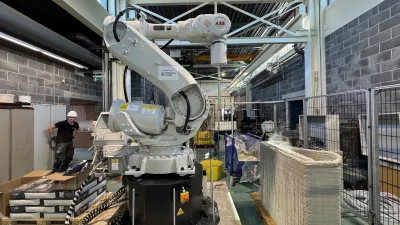
“We want to build partnerships with organisations such as HTL.tech and the Advanced Manufacturing Training Centre of Excellence in Louth to give our learners access to world-class facilities to see MMC processes, such as 3D concrete printing, in action. We also want to organise site visits to advanced offsite manufacturing sites, such as NUA Manufacturing in Carlow. This way learners can tangibly see how what they learn in the Masters programme will tie back to work they do every day.”
Associate Professor in the UCD School of Civil Engineering

To update your Modern Methods of Construction skills in 2026, explore all the options for flexible training courses available on Skillnet MMC Accelerate.
Related
-
 Increasing Sustainability and Reducing Carbon Output with Green Construction Materials and Training
 -
 The New NZEB Centre of Excellence Set to Transform Green Construction Upskilling in Ireland’s Northwest
 -
 Teaching the Sustainable Design Skills Needed to Make Passivhaus the New Standard for Irish Construction